

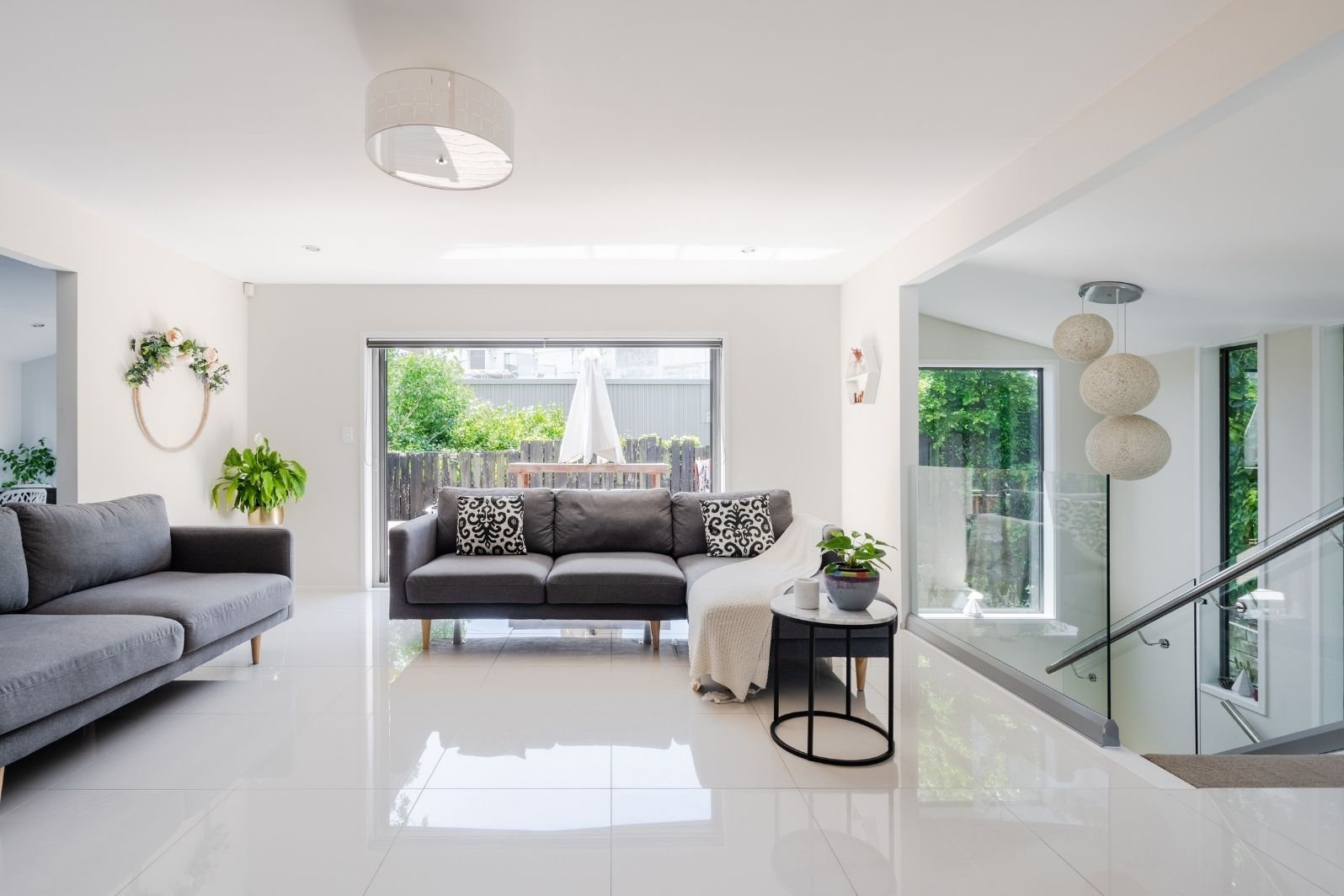
Not everyone has the option to add square footage, but a small home doesn’t have to feel cramped. Through thoughtful design choices — color, furniture arrangement, lighting, and smart storage — it’s possible to make a compact space feel significantly more open and spacious without any structural changes. Here are practical, easy-to-implement ways to do it.
1. Choose Light, Neutral Colors
Light colors reflect more light and create a sense of openness, while dark colors tend to visually shrink a space. Painting walls in soft whites, light grays, or gentle pastels can make rooms feel larger and airier. If you love bold color, consider using it as an accent rather than covering entire walls.
2. Maximize Natural Light
Natural light makes any space feel more open. Keep windows unobstructed, use sheer or lightweight curtains instead of heavy drapes, and avoid placing large furniture directly in front of windows. If privacy is a concern, frosted window film can maintain light flow while still offering coverage.
3. Use Mirrors Strategically
Mirrors reflect light and create the illusion of additional depth, making a room feel larger than it is. Placing a mirror across from a window or a light source can double the perceived brightness and openness of a room, while a well-placed mirror in a hallway or small entryway can make the space feel far less confined.
4. Choose Furniture That Fits the Scale of the Room
Oversized furniture can overwhelm a small space, making it feel cramped even if the pieces themselves are comfortable. Opt for furniture scaled appropriately to the room, and consider pieces with visible legs, since they create a sense of openness underneath compared to furniture that sits flush to the floor.
5. Embrace Multi-Functional Furniture
Furniture that serves more than one purpose — a storage ottoman, a sofa bed, an extendable dining table — reduces the number of individual pieces needed in a small space, helping the room feel less cluttered while still meeting functional needs.
6. Declutter and Simplify
Visual clutter is one of the fastest ways to make any space feel smaller than it is. Regularly editing down belongings, keeping surfaces clear, and finding dedicated storage for everyday items helps maintain an open, uncluttered feel, even in a genuinely small space.
7. Use Vertical Space
When floor space is limited, drawing the eye upward can create a sense of additional space. Tall bookshelves, wall-mounted storage, and curtains hung closer to the ceiling rather than directly above the window frame all help elongate a room visually and make ceilings feel higher.
8. Keep a Consistent Flooring Throughout
Using the same flooring material throughout connected spaces — rather than switching between different flooring types room to room — creates visual continuity that makes a small home feel more expansive and less segmented.
9. Choose the Right Lighting
Good lighting design — including layered lighting from ceiling fixtures, lamps, and accent lights — helps eliminate dark corners that can make a room feel smaller. Warm, well-distributed light throughout a space tends to feel more open than a single, harsh overhead light source.
10. Limit Heavy Patterns and Busy Prints
Large-scale or busy patterns on furniture, rugs, and curtains can visually crowd a small room. Sticking to simpler patterns, or using bold prints sparingly as accents, helps maintain an open, uncluttered visual feel.
11. Create Sightlines Through the Home
Arranging furniture so it doesn’t block natural sightlines through a room — or between rooms — helps the eye travel further, creating a greater sense of openness. Avoid placing tall furniture directly in the middle of a room or blocking natural pathways.
12. Use Open Shelving Thoughtfully
Open shelving can make a small kitchen or living space feel less enclosed than solid cabinetry, particularly when kept relatively uncluttered. This works best when paired with intentional organization, since open shelving can also visually clutter a space if overloaded.
13. Bring in Greenery
Plants add life and softness to a small space without taking up significant floor area, especially when placed on shelves, in hanging planters, or in vertical arrangements. Greenery has also been associated with improved mood, adding a wellbeing benefit alongside the visual one.
Final Thoughts
Making a small home feel bigger doesn’t require renovation or major expense — it comes down to intentional choices about light, color, furniture scale, and organization. Small, thoughtful adjustments, applied consistently throughout a space, can meaningfully change how open and comfortable a compact home feels day to day.
